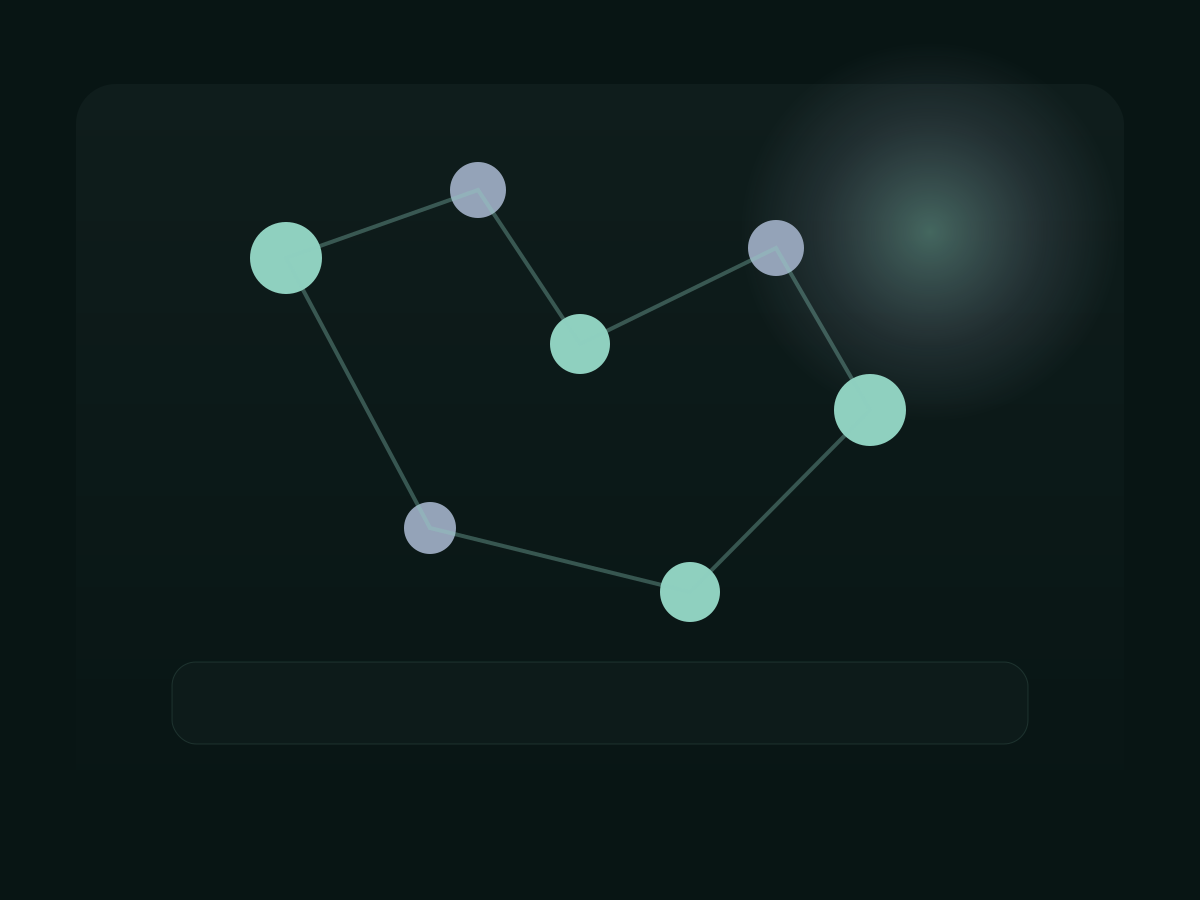
Backbone Reliable placement before dense room logic
This route keeps border routers, mesh placement and protocol compatibility in one operational pass before the automation layer grows.
Network-first rollout
Lock compatibility, distribute routers by zone and keep the house stable before adding another layer of scenes or assistants.

Border routers
Mesh stability
Latency (avg)
Matter sync
Infrastructure access
Registry
Keep protocol support and transport quality close so the router choice does not poison the stack later.
Blueprints
Tie the network layer back to automations, room logic and fallback behavior before rollout.
Archive
Use the archive for deployment notes, buying context and operational follow-up.
Build the Thread fabric around always-on routers before trusting battery devices.
Spread border routers across the house instead of stacking them in the same room.
Validate Thread and Matter support before assuming a hub or speaker can anchor the mesh.
Verified border routers
| Device | Chipset | Protocol version | Power |
|---|---|---|---|
| Apple TV 4K (2022) | A15 Bionic | v1.3 | Mains |
| HomePod (2nd Gen) | S7 | v1.3 | Mains |
| Sky Connect | EFR32MG21 | v1.2 | USB |
| Nanoleaf Shapes | Custom | v1.1 | Mains |